
-
Liquid Nitrogen Containers
-
 Small Portable Liquid Nitrogen Container
-
 Transportable Liquid Nitrogen Tank
-
 Standard 50mm Caliber Liquid Nitrogen Flask
-
 Big Caliber Liquid Nitrogen Cylinder
-
 Liquid Nitrogen Dewar For Cell Storage
-
 Liquid Nitrogen Vessel For Bueaty
-
 Animal Semen Storage Ln2 Tank
-
 Cryogenic Liquid Nitrogen Dewar
-
 YDS-30-125 Liquid Nitrogen Storage Container
-
 2 Liter Liquid Nitrogen Container
-
- Stainless Steel Tank
- Customized Tank
- Liquid Nitrogen Generator
- Industries


Why a Liquid Nitrogen Tank Lid Is Never Sealed Tight?
21-Oct-26
First-time users are often puzzled by the lid of a liquid nitrogen tank: it sits loosely over the neck and lifts away with a light pull, looking neither secure nor tight. In fact, this looseness is deliberate.
The reason lies in continuous evaporation. No tank can block heat ingress completely, so the liquid inside is always slowly turning into gas. When a liquid vaporises its volume expands greatly, and in a closed space pressure would build up steadily. The neck plug is therefore made a loose fit: it limits the inflow of outside air and slows evaporation, yet leaves a path for gas to escape, keeping internal and external pressure balanced. Some models add a pressure gauge, a relief valve or a burst disc as extra protection against abnormal pressure.
Transport tanks handle this slightly differently. Their neck plugs are somewhat tighter to limit sloshing and spillage on the move, but they are still not hermetic, since prolonged evaporation during a long journey would otherwise cause pressure to accumulate.
Several practical rules follow. Storage areas should be well ventilated, so that nitrogen gas cannot build up in a confined space and reduce the local oxygen concentration. Never add home-made seals or block the neck with other objects. Raise and lower racks briskly and replace the plug straight away. If the plug freezes to the neck, it is better to let it thaw naturally than to force it loose.
In cryogenic design, leaving room is often safer than sealing everything shut. That apparently loose lid is precisely this principle at work.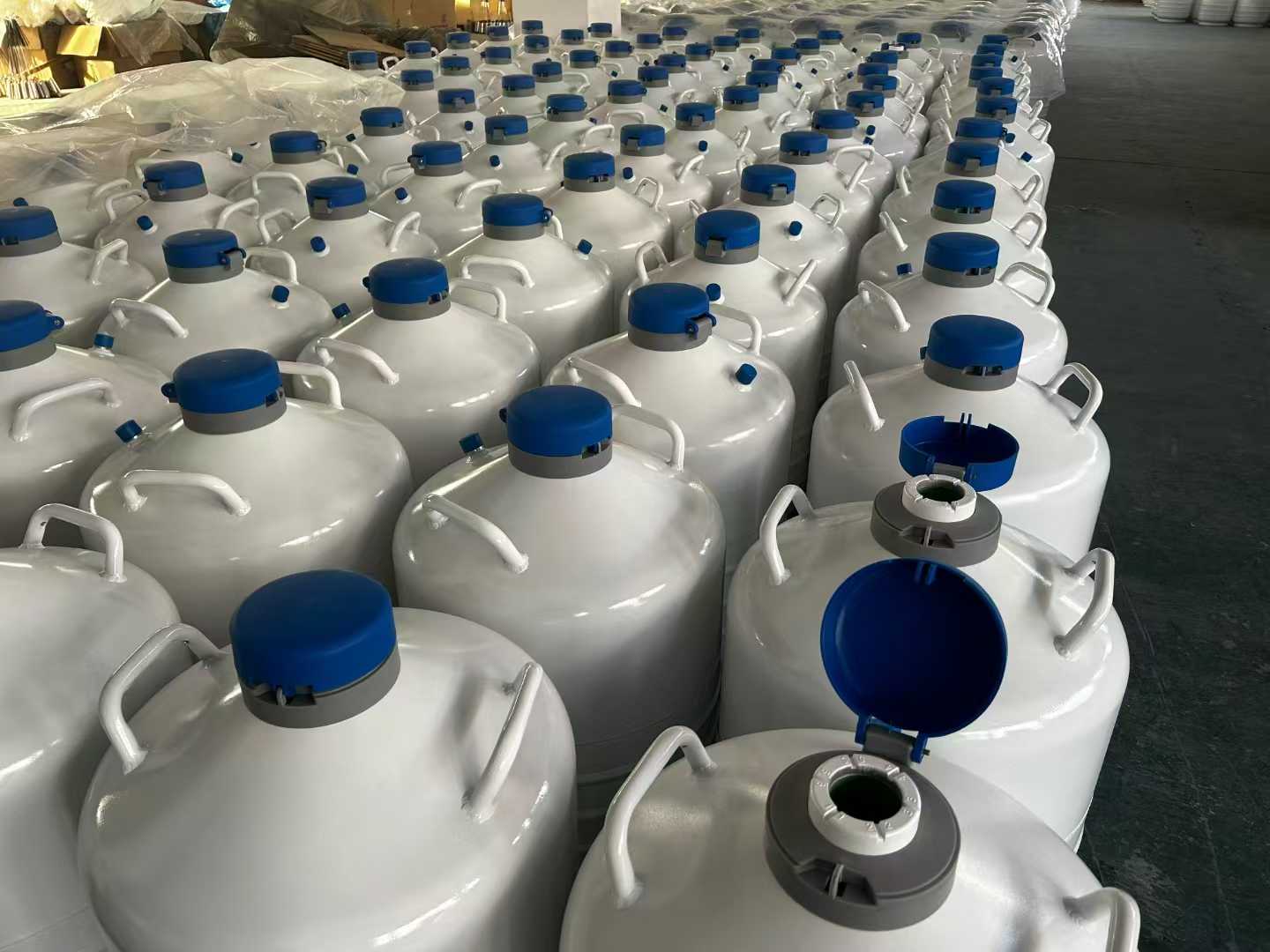
- Products Category
- Liquid Nitrogen Containers
- Stainless Steel Tank
- Customized Tank
- Liquid Nitrogen Generator
- Industries
- Lasted Blogs
- Why a Liquid Nitrogen Tank Lid Is Never Sealed Tight? Oct 21,2026
- Where Liquid Nitrogen Comes From: From Air to −196 °C Oct 20,2026
- Frost on a Liquid Nitrogen Tank: Normal or a Warning Sign? Oct 19,2026
- Why Temperature Inside a Liquid Nitrogen Tank Is Not Uniform Oct 16,2026
 Free Quote
Send message

Xinxiang Zhongpanxin Industry Co.Ltd. is mainly specialized in manufacturing liquid nitrogen container, liquid nitrogen freezer, liquid level gauge, liquid level monitor, livestock husbandry tools for almost two decades.
 Products