
-
Liquid Nitrogen Containers
-
 Small Portable Liquid Nitrogen Container
-
 Transportable Liquid Nitrogen Tank
-
 Standard 50mm Caliber Liquid Nitrogen Flask
-
 Big Caliber Liquid Nitrogen Cylinder
-
 Liquid Nitrogen Dewar For Cell Storage
-
 Liquid Nitrogen Vessel For Bueaty
-
 Animal Semen Storage Ln2 Tank
-
 Cryogenic Liquid Nitrogen Dewar
-
 YDS-30-125 Liquid Nitrogen Storage Container
-
 2 Liter Liquid Nitrogen Container
-
- Stainless Steel Tank
- Customized Tank
- Liquid Nitrogen Generator
- Industries


Why Samples Should Not Be Plunged Straight into Liquid Nitrogen?
22-Oct-26
Cryopreservation is often reduced to a simple rule: the lower the temperature and the faster the cooling, the better. In practice it is not so. What determines whether a sample survives is frequently not the final temperature but the way it gets there.
Water is the problem. Cells contain a great deal of it, and below freezing it solidifies, expands and forms angular ice crystals. These crystals can puncture membranes and organelles, causing mechanical damage that is difficult to reverse. At the same time, water outside the cell freezes first, raising the solute concentration of the remaining solution; osmotic pressure then draws water out of the cell, which shrivels and dehydrates. Ice-crystal injury and this "solution effect" are the two principal sources of damage during freezing.
Two technical paths follow. The first is controlled-rate cooling: the temperature is lowered gradually so that water leaves the cell in an orderly fashion and intracellular ice is minimised, with cryoprotectants such as dimethyl sulfoxide or glycerol used to depress the freezing point and moderate solute concentration. The second is vitrification: a very high cooling rate combined with a higher concentration of protectant, so that water has no time to arrange itself into crystals and instead becomes an amorphous glassy state, sidestepping ice altogether. The two approaches differ considerably in their requirements for cooling rate and reagent formulation.
The relevance to a liquid nitrogen tank is a division of labour: the tank handles storage, while the cooling process handles entry. Dropping a sample straight into liquid nitrogen abandons rate control altogether. In practice, cooling is completed in a controlled-rate freezer before transfer to the tank, or the vapour zone is used as an intermediate step, with racks and boxes pre-cooled to lessen thermal shock. Thawing matters just as much, and rapid rewarming is generally recommended to avoid recrystallisation during warming.
The outcome of cryopreservation is often decided before the sample ever reaches the tank.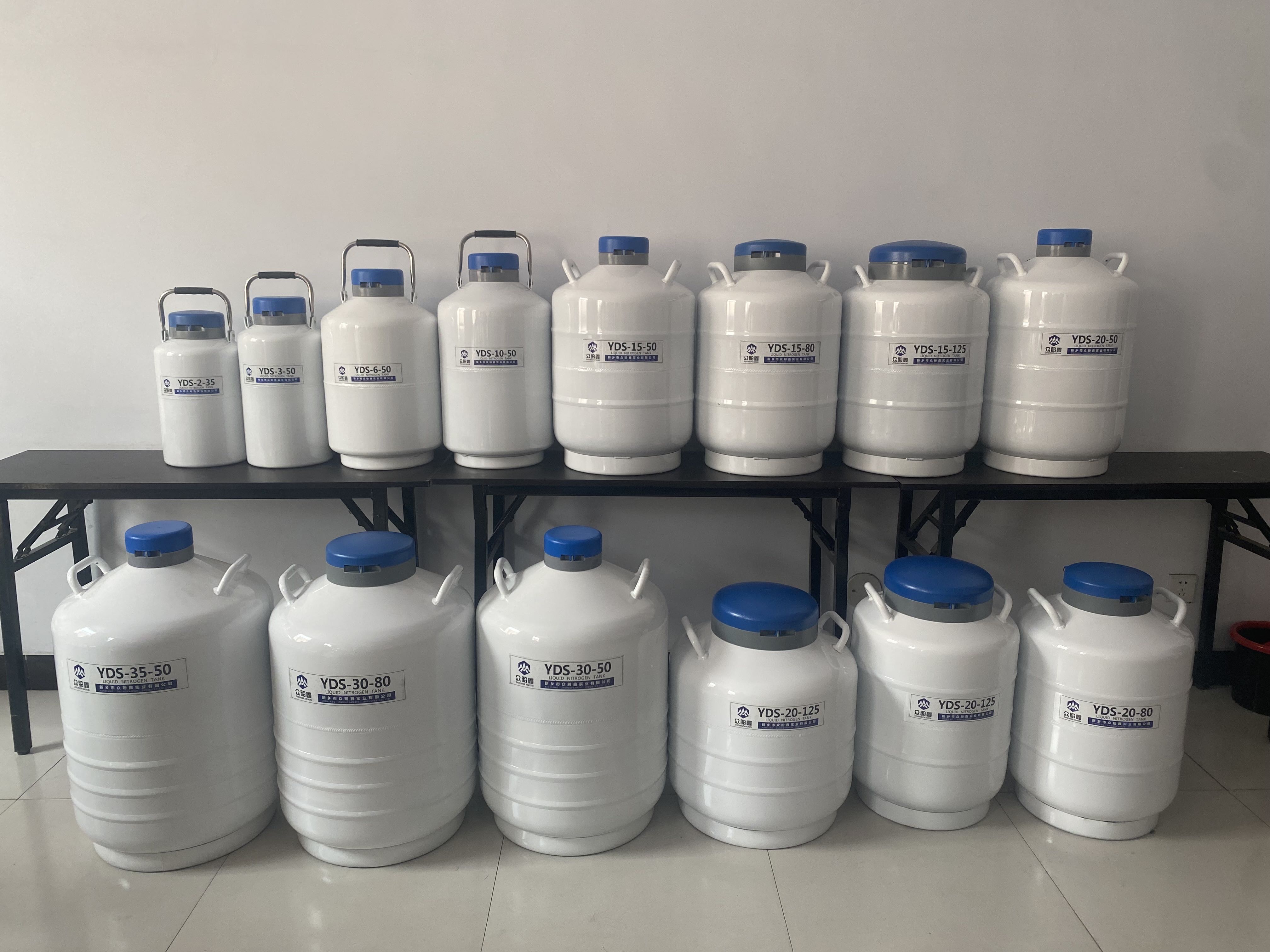
- Products Category
- Liquid Nitrogen Containers
- Stainless Steel Tank
- Customized Tank
- Liquid Nitrogen Generator
- Industries
- Lasted Blogs
- Why Samples Should Not Be Plunged Straight into Liquid Nitrogen? Oct 22,2026
- Why a Liquid Nitrogen Tank Lid Is Never Sealed Tight? Oct 21,2026
- Where Liquid Nitrogen Comes From: From Air to −196 °C Oct 20,2026
- Frost on a Liquid Nitrogen Tank: Normal or a Warning Sign? Oct 19,2026
 Free Quote
Send message

Xinxiang Zhongpanxin Industry Co.Ltd. is mainly specialized in manufacturing liquid nitrogen container, liquid nitrogen freezer, liquid level gauge, liquid level monitor, livestock husbandry tools for almost two decades.
 Products